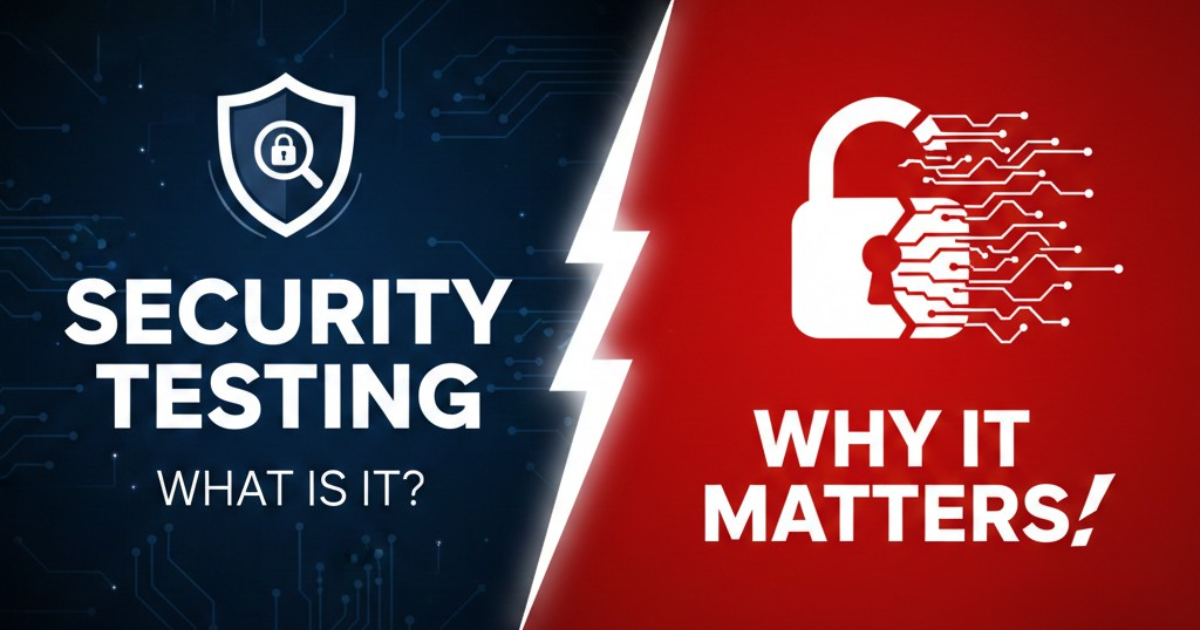
What Is Security Testing?
The goal is simple but crucial:
- Detect security flaws
- Assess risk exposure
- Ensure data protection
- Validate compliance with security standards
Unlike functional testing, which checks whether something works, security testing focuses on how it can be broken.
Key Types of Security Testing
1. Vulnerability Assessment
2. Penetration Testing
3. Application Security Testing
Covers web apps, mobile apps, and APIs using methods such as:
- SAST (Static Application Security Testing)
- DAST (Dynamic Application Security Testing)
- API security testing
4. Network Security Testing
5. Compliance & Risk-Based Testing
Why Security Testing Matters More Than Ever
- Prevents Costly Data Breaches: A single vulnerability can expose customer data, intellectual property, and financial records—leading to massive losses.
- Protects Brand Reputation: Trust is hard to earn and easy to lose. Security incidents can permanently damage customer confidence.
- Enables Compliance & Audits: Many regulations require regular security testing. Skipping it can result in fines, legal trouble, or failed audits.
- Supports Faster, Safer Releases: Security testing integrated into development pipelines helps teams release features without introducing risk.
- Reduces Long-Term Costs: Fixing vulnerabilities early is far cheaper than responding to breaches after deployment.
Common Security Testing Mistakes Businesses Make
- Relying only on automated scans
- Testing once instead of continuously
- Ignoring API and third-party risks
- Treating compliance as a checkbox exercise
- Not validating findings with real exploitation
This is why expert-led, hands-on security testing is essential.
How Accuract Technologies Helps Secure Your Business
Accuract Technologies provides end-to-end security testing services designed for modern, fast-moving organizations. Our approach goes beyond surface-level scans—we focus on real risk reduction and actionable outcomes.
Why Choose Accuract Technologies?
- Expert-Led Penetration Testing: Our security engineers simulate real-world attacks to uncover critical vulnerabilities that automated tools miss.
- Clear, Actionable Reports: No confusing jargon. Our reports prioritize risk, explain impact, and provide step-by-step remediation guidance.
- Compliance-Ready Testing: We help organizations prepare for SOC 2, ISO 27001, and customer security reviews with confidence.
- Hands-On Remediation Support: We don’t just find issues—we work with your team to fix them.
- Security That Scales With You: From startups to growing enterprises, our testing aligns with your release cycles and business goals.
When Should You Perform Security Testing?
You should conduct security testing:
- Before product launches
- After major updates or architecture changes
- When preparing for audits or certifications
- When onboarding enterprise customers
- On a recurring basis as part of DevSecOps
Security testing is not a one-time task—it’s an ongoing commitment.
Final Thoughts
Security testing is no longer just a technical requirement—it’s a business necessity. It protects your data, your customers, and your reputation while enabling growth without fear.
By partnering with a trusted security testing provider like Accuract Technologies, organizations gain more than vulnerability reports—they gain confidence, clarity, and peace of mind.
If you’re ready to take a proactive approach to security, now is the time to test, strengthen, and secure your systems.
Frequently Asked Questions (FAQs)
1. What is the main purpose of security testing?
The primary purpose of security testing is to identify vulnerabilities, weaknesses, and misconfigurations in applications, systems, or networks before attackers can exploit them. It helps protect sensitive data, ensure system integrity, and reduce the risk of security breaches.
2. How is security testing different from functional testing?
3. How often should security testing be performed?
4. Is automated security scanning enough?
Automated tools are helpful for identifying known issues, but they are not sufficient on their own. Manual, expert-led testing—such as penetration testing—uncovers complex vulnerabilities and business logic flaws that tools often miss.
5. What types of applications need security testing?
All digital assets require security testing, including:
- Web applications
- Mobile applications
- APIs
- Cloud infrastructure
- Internal systems and networks
Any system that handles data or is internet-accessible should be tested.
6. What are the risks of skipping security testing?
7. Does security testing help with compliance requirements?
8. What kind of reports are provided after security testing?
A professional security testing provider delivers clear, actionable reports that include:
- Identified vulnerabilities
- Risk severity and impact
- Proof of exploitation (where applicable)
- Step-by-step remediation guidance
Accuract Technologies focuses on reports that development and leadership teams can actually use.
9. Can security testing slow down development?
10. Why choose Accuract Technologies for security testing?
Accuract Technologies combines hands-on expertise with business-focused security testing. The team delivers real-world attack simulations, compliance-ready documentation, and practical remediation guidance—helping organizations reduce risk without unnecessary complexity.